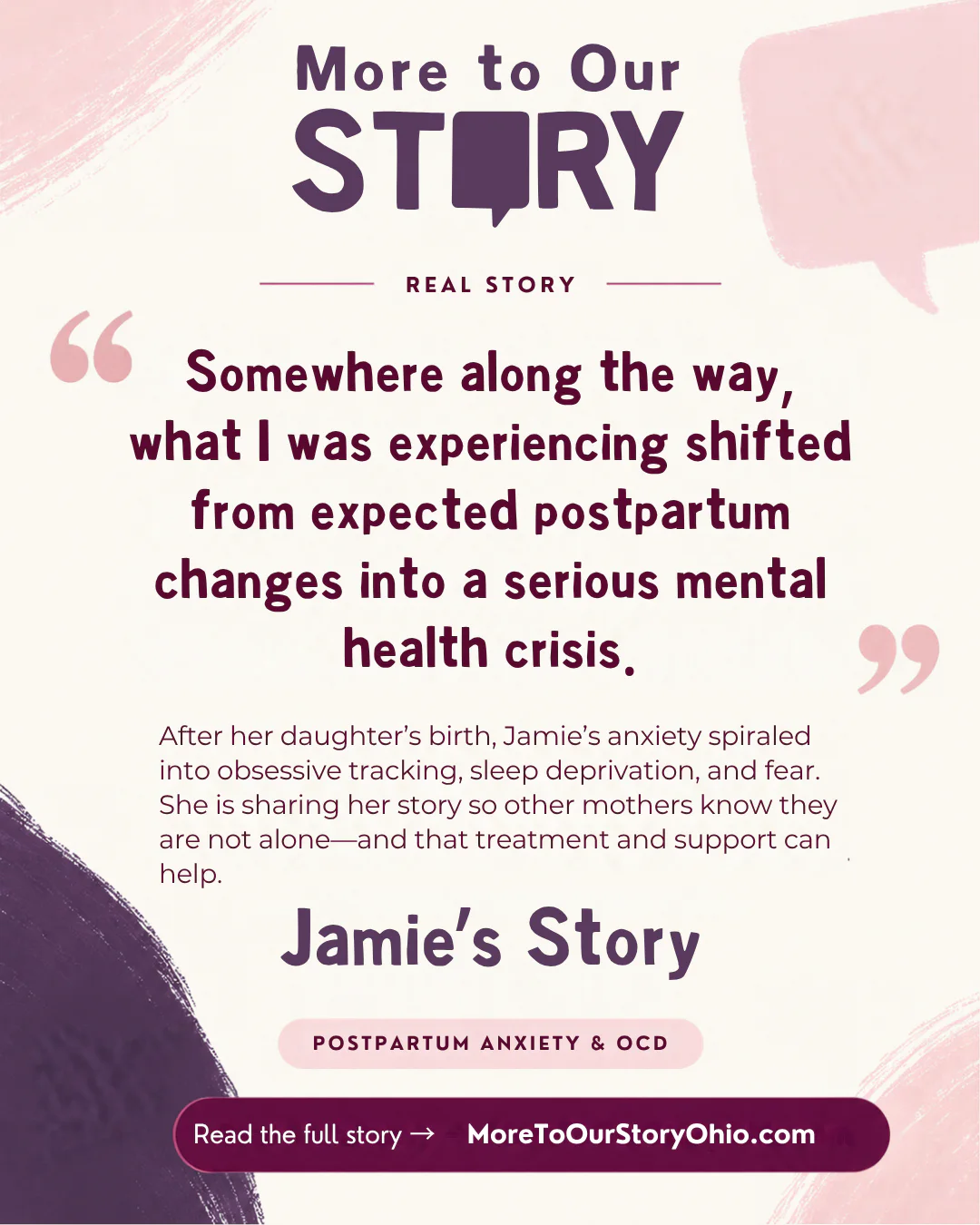

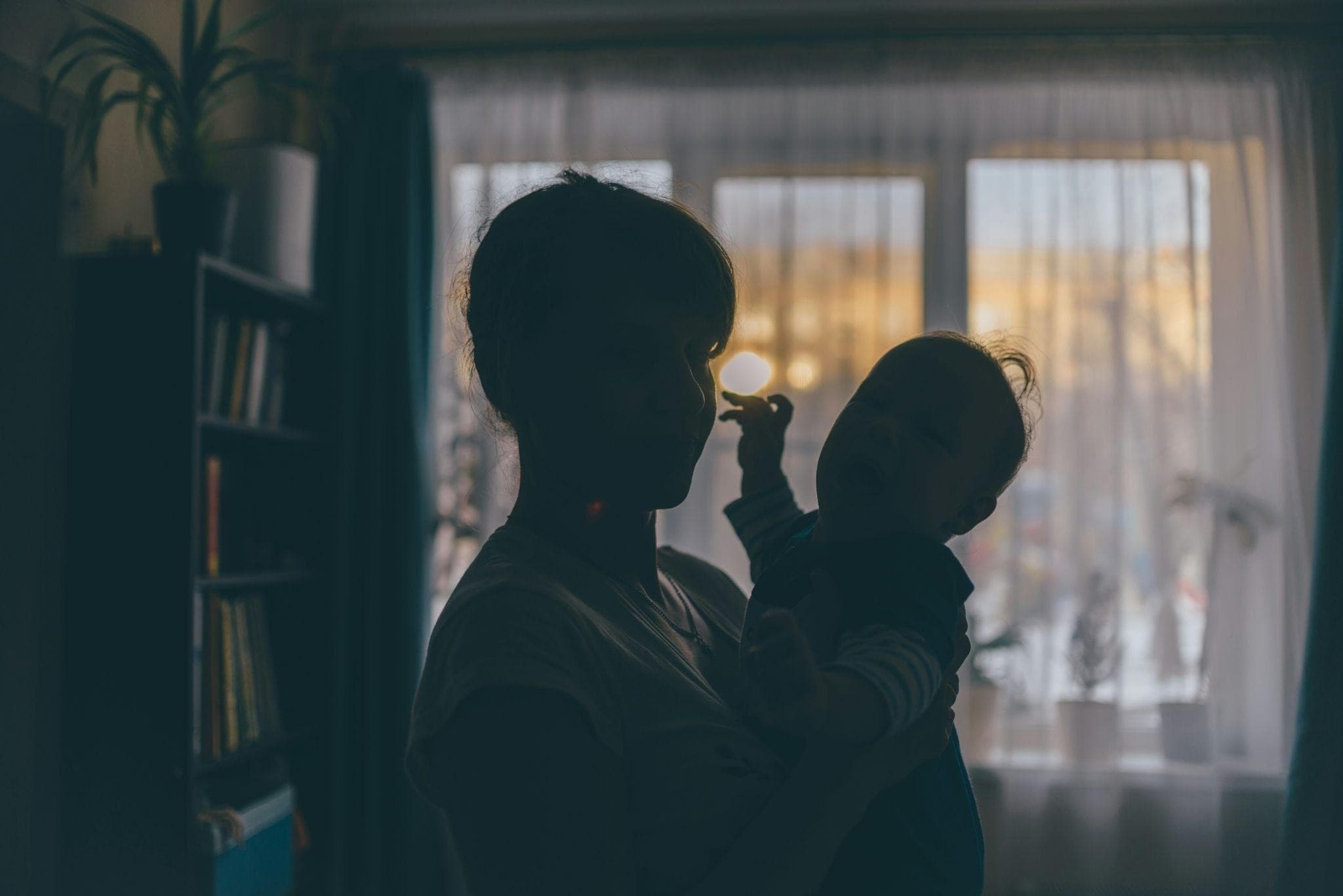
Jamie’s Story
Anxiety and I have been companions for as long as I can remember. I was the typical “pleasure to have in class” girlie—involved in all the things and friends with all the people—despite the undercurrent of anxiety I experienced.
By my late 20s, I was exhausted from trying to manage my anxiety on my own. With the help of my primary care provider, I added medication to my care plan, along with consistent therapy. Fast-forward to my early 30s, when my husband and I decided we were ready to expand our family. Although some medications can be taken safely during pregnancy, I decided to stop taking mine while trying to become pregnant and remained off it throughout my pregnancy.
During pregnancy, my mood was stable, relatively speaking, and my delivery was thankfully unremarkable. My baby and I both came through it physically healthy. I knew significant hormonal changes were common after childbirth, and I certainly felt their effects during the first few weeks after giving birth. Restarting my medication did not even cross my mind because I believed what I was experiencing was a typical part of postpartum recovery.
Somewhere along the way, what I was experiencing shifted from expected postpartum changes into a serious mental health crisis.
My decline began with an obsession with my daughter’s sleep schedule. My house was covered in Post-it notes tracking every minute of sleep and detailing the exact times she needed to sleep to have an optimal schedule. I spent hours scrolling through social media, trying to decide which sleep consultant’s advice I trusted most and what might help her sleep best.
When she did what babies do and made her own schedule, I would melt down and move on to the next possible solution. I spent the hours she was sleeping—when I should have been sleeping—scrolling and watching her monitor, paralyzed by anxiety that she would wake up and prove I could not “figure out” how to help her sleep. Each time she woke up, I would run to the bathroom and vomit.
My nerves were shot, and my body started to shut down. I lost so much weight that I weighed less than I had 20 years earlier. I was so weak from not eating that I could not make it around the block with the stroller.
At some point, my husband urged me to seek help. I sent my OB-GYN a message saying I did not think I was okay and asking for help. The office sent me a message asking me to call to schedule an appointment. I was unwell, so I never called—and no one followed up.
On the eve of my 34th birthday, when my daughter was almost three months old, I was lying awake in bed, overwhelmed by the effects of severe sleep deprivation. I realized I was out of hope. I called my OB-GYN’s after-hours line and said I did not think I could do it anymore. They urged me to go to the emergency room.
I woke my husband and said, “I’m taking myself to the ER.” Then I left without giving him any details or time to object to me driving myself.
From the emergency room, I was admitted directly to a psychiatric hospital, where I spent three days and nights away from my baby and shared a room with another patient. My sleep became even worse, with attendants checking on us every 10 minutes throughout the night. I was plagued by guilt for being away from my baby.
I wasn’t sure why I was there. I was the only new mom, and I asked a nurse what I needed to do to leave. She told me to brush my teeth and hair, show up to collect my meals, and make an effort to participate in group sessions. Between my efforts and a plan to begin a new medication, I was released after 72 hours.
I would like to say this is where my story started to get better, but things got worse from there.
I cycled through a few medications, becoming convinced that each one was not working after consulting the “experts” on Reddit. I tried to eat but couldn’t, so I lived on nutrition shakes and smoothies. I started treatment-chasing—visiting sleep doctors and other practitioners, trying to find a quick fix for what I was experiencing.
There were moments when I could not trust what I was seeing or thinking. Once, I tried to take a walk but could not go very far because I became convinced that a stick on the path was a large snake. At other times, my thoughts and actions became frantic and impulsive. One night, I woke my husband, mom, and dad to announce that I was leaving for Florida in the morning to check myself into a facility there.
My teeth would chatter uncontrollably. I also experienced unwanted, frightening thoughts. If I was using a knife or scissors, I would make my husband take the baby into another room because I was afraid I might fall and hurt her.
I later learned that I was experiencing postpartum anxiety and postpartum OCD—the latter being a condition many people do not know exists. I also began to recognize that some of these patterns had been present for a long time. This helped me understand many of the symptoms I had experienced, including the constant reassurance-seeking, checking, and unwanted thoughts.
There are many moments from the first four months of my daughter’s life that I do not remember, some that I was not there for, and others that I have spent four years trying to heal from.
Through this experience, I learned how difficult it can be for a new mother to recognize what is happening, tell someone the full truth, and find the right care. We also do not talk enough about these conditions. I know that contributed to my reluctance to be completely honest with my care providers because I was afraid my child would be taken from me.
I am fortunate that I was able to claw my way out of the hole I was in and that I had people who helped me do it. My husband and parents provided unconditional support and gave my daughter what I could not during those first few months. My two best friends called a local support program, told them what I was experiencing, and asked them to reach out to me.
Treatment is critical, whether that means therapy, medication, or, in my case, a combination of both. Professional and peer support are also available through resources such as Postpartum Support International, the 988 Suicide & Crisis Lifeline, and POEM—Perinatal Outreach & Encouragement for Moms—which offers peer support, resources, referrals, education, and community for moms in Ohio.
By sharing my experience, I hope to do a few things.
First, I want someone going through something similar to feel less alone. I see you. You matter. You will find a new version of yourself.
Second, I want others to know that, with time, it is possible to turn pain into passion. I have gone on to work with the Ohio Perinatal Behavioral Health Task Force to improve perinatal mental health care. I have also participated in a gathering of researchers, clinicians, and people with personal experience focused on preventing perinatal suicide.
I recognize how fortunate I was to have the support and resources that helped me recover. I am telling my story because I want to be part of creating better awareness, care, and support for those who may not have access to the same things.
I hate that I had to go through what I did, but I am proud of the strength I found for myself and my family. I hope my daughter will one day be proud of this story, too.
You may see yourself in someone else’s story.