Rebecca’s Story
In October 2024, I gave birth to a beautiful baby girl. She was planned, and my husband and I were ready.
A few days after giving birth, anxiety took over. My appetite plummeted. I couldn’t sleep. My stomach was upset. I was in a state of panic for no apparent reason, 24/7.
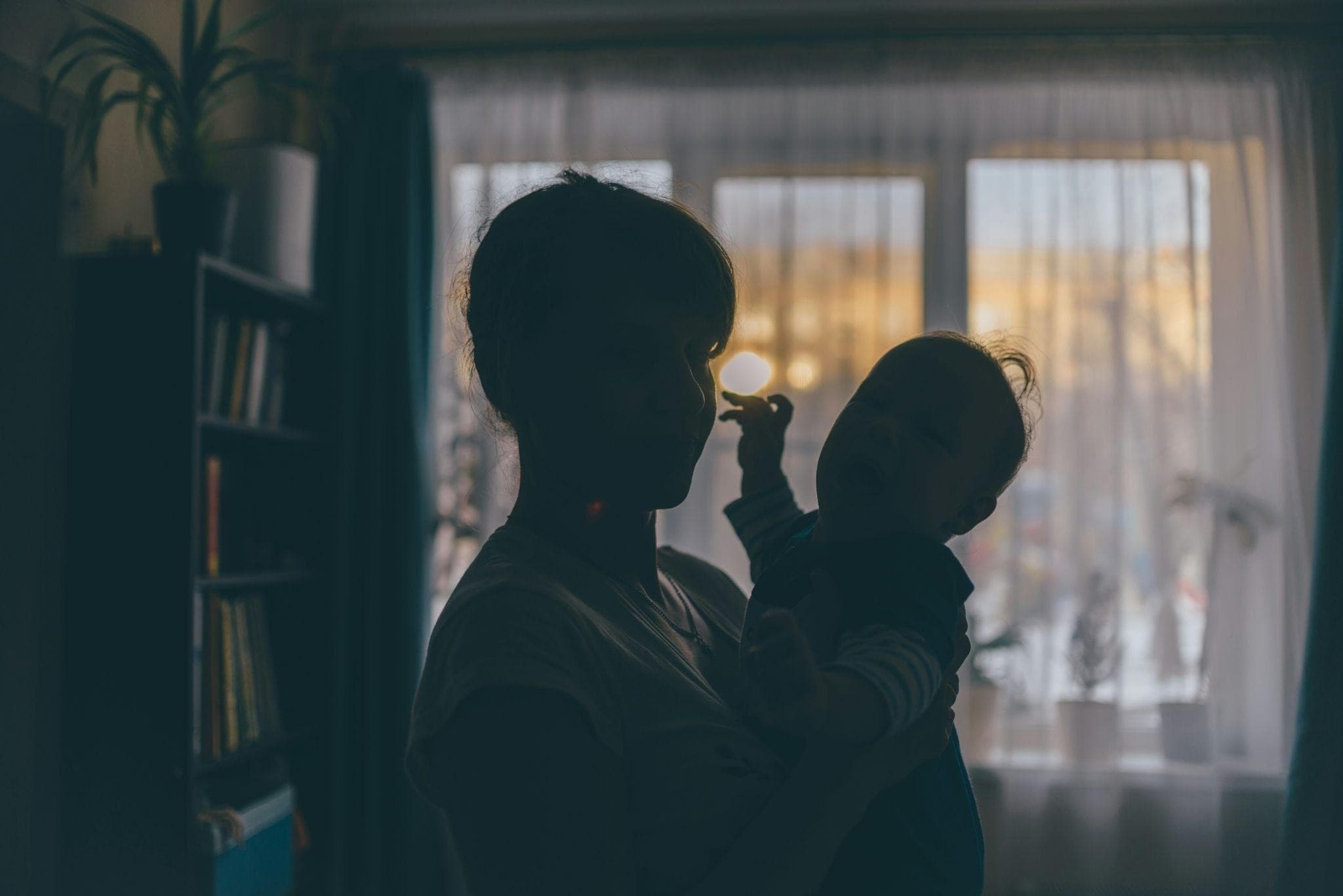
To my family, it was invisible. They saw a new mom sitting on the couch, holding her baby closely. My husband saw his wife smiling back at our baby girl. My mom saw me hold a conversation and change a diaper. Although I told them I felt very anxious, they did not fully understand the severity of what I was experiencing. Inside, I felt nothing but fear and despair.
After 10 days, I couldn’t stand another minute. I met with an available OB and was prescribed a mental health medication. I had always avoided medication because I was afraid of the side effects, but I decided to try it. Unfortunately, it caused physical side effects I couldn’t tolerate, so I stopped taking it. I thought to myself, “I’ll just have to get better on my own.”
Over the following six weeks, severe depression quickly joined the severe anxiety, creating a mixture I could barely tolerate. That was invisible, too. My husband did not understand why I kept asking him to delay paying off our cars every time he brought it up. All I knew was that I did not believe I would be around much longer because of this mental anguish, and I thought he would need as much money in the bank as possible without me.
I knew about postpartum depression. After all, I worked as a multi-county director for the WIC program, which helps pregnant and postpartum women with nutrition, breastfeeding support and other resources. I also knew from my countless internet searches that postpartum depression was treatable.
Between my brain’s ruminating thoughts, I would tell myself, “I can do this. I can get better. These are just thoughts. Something will click. My hormones will regulate. I’ll get better. I just need to make it another day! I don’t want my daughter to live her life without me! I breastfeed, and she won’t take a bottle. She needs me!”
Finally, my six-week postpartum follow-up arrived. The second my OB—the same doctor who had performed my successful C-section—walked into the room, I blurted out, “I’m not okay! I’m not okay.”
She prescribed a different mental health medication. Although it had side effects, they were tolerable, and I believed the medication was my only hope. Just four days later, while taking the lowest starting dose, I realized I had eaten a meal at a regular speed. I realized I had actually fallen asleep at night.
My story did not end there. Over many, many months, my dose continued to increase. Each time, I felt just a little bit better. Each time, I was able to enjoy motherhood and my daughter just a little bit more.
Today, I am 20 months postpartum, still breastfeeding and still getting a little bit better every day. I would consider myself 90% better. I am working with a wonderful psychiatric nurse practitioner who understands what I am going through and helps me find medications and dosages that work well for me.
I am now a perinatal mental health advocate. Every time a WIC participant comes into the office and says she is suffering, I speak with her myself. I share my story of hope. I spread awareness of perinatal mental health conditions in the hope that a future father, a future mother, a family member, or a friend can recognize the signs and symptoms and become an integral part of someone’s healing journey.
I really could get better, and I knew it deep within me. It took resilience, bravery and persistence. Today, the girl who was once a precious newborn is a loving toddler who calls me “Mommy” and says, “I luz you” every day.
You may see yourself in someone else’s story.