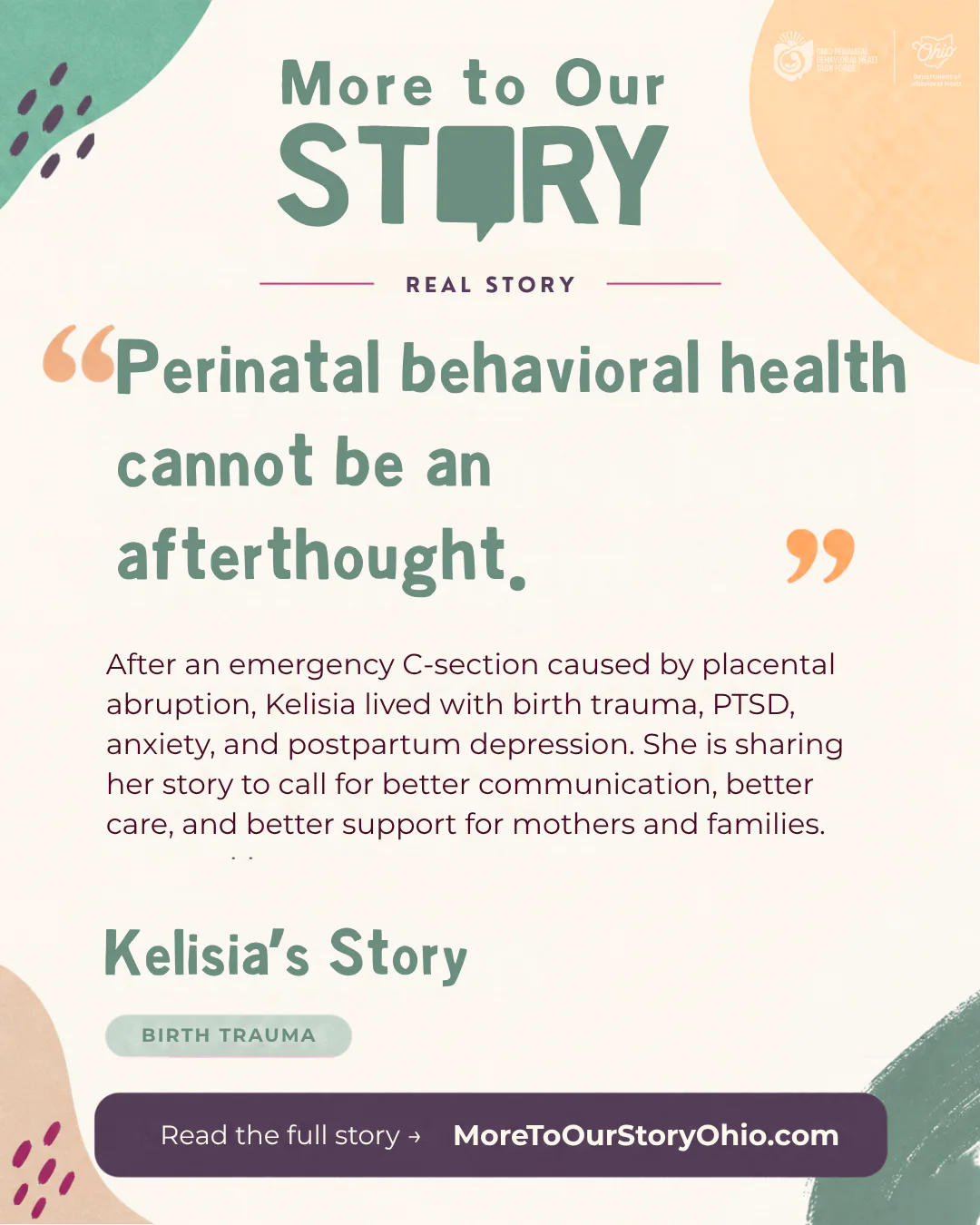
Kelisia’s Story
“God, I know you allowed me to become pregnant with Timothy so that my family could have a remembrance of how he became a part of our lives. Please take care of my children and allow Walt to get all the help he needs to care for our family. I know I wasn’t perfect, but I believe I will enter heaven.”
This is the prayer that ran through my mind as I became certain I would not survive my emergency C-section.
The emergency was caused by a placental abruption. For roughly 37 minutes, nurses and other healthcare professionals worked frantically to protect me and my baby.
When I heard one healthcare worker whisper to another, “We’ve never used this many tubes before,” how was I supposed to feel at ease? No one was speaking directly to me or my family about what was happening in the delivery room.
Being able to share this experience and speak for mothers who may experience birth trauma feels like nothing short of a miracle—because this happened to me.
Birth trauma will continue to happen, but mothers deserve care that recognizes and responds to its emotional and mental health impact. As a mother who experienced PTSD, anxiety, and postpartum depression following my birth trauma—and whose healing has become a daily choice—I have to say this clearly: perinatal behavioral health cannot be an afterthought.
Mothers are essential to our families and communities. When our mental health is not prioritized and properly cared for, it can affect every part of our lives—our well-being, our relationships, and our ability to care for ourselves and our families.
That is why I am telling my story and why I stand alongside POEM—Perinatal Outreach & Encouragement for Moms—and others working to improve support for mothers throughout pregnancy and postpartum. Through my own work with mothers in my community, I see every day how much this support is needed.
I am telling my story because I want to be part of the solution. I want my experience to help others understand how much a mother’s mental health matters—and how much clear, honest communication matters, especially during an emergency.
Let Ohio be known for better care, better communication, and better support for mothers and their families.
Why? Because that’s who we are.
You may see yourself in someone else’s story.